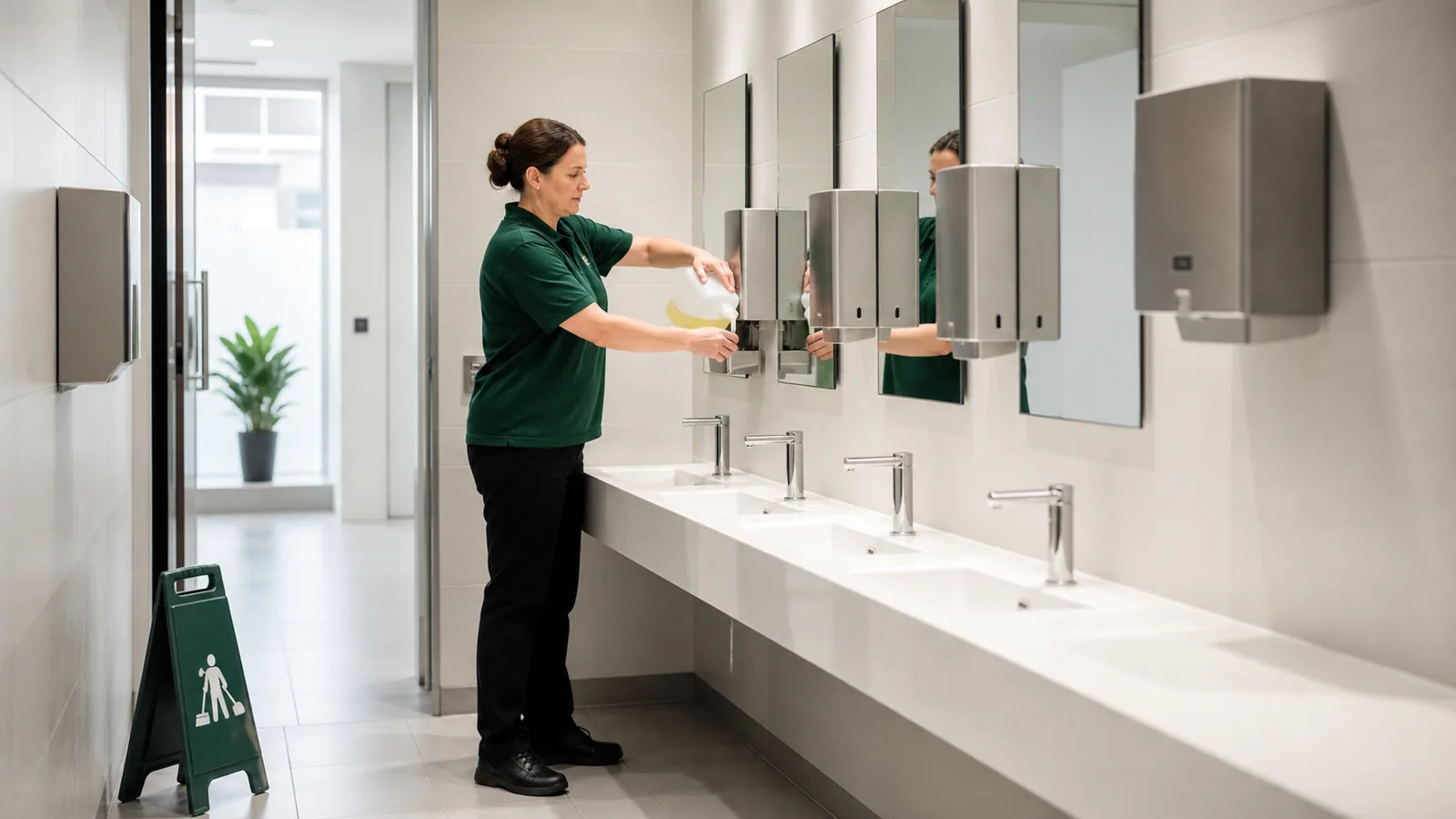
Washrooms can make an otherwise well-maintained office feel poorly managed. A once-daily clean may be adequate for a lightly occupied site, while a busy workplace needs checks throughout the day.
The schedule should respond to actual use and define both cleaning tasks and supply responsibilities.
Measure demand
Record:
- Average daily occupancy
- Peak attendance days
- Visitor numbers
- Number of washrooms and fixtures
- Opening hours
- Events or shift changes
- Existing complaint patterns
- Frequency of supply shortages
Hybrid offices may need more attention Tuesday to Thursday than on quieter days. Review use rather than applying the same schedule automatically.
Separate full cleans and service checks
A full clean normally covers all fixtures, surfaces, floors and waste.
A service check is a shorter visit to:
- Inspect the condition
- Remove visible contamination
- Replenish supplies
- Empty bins where required
- Spot-clean mirrors and touchpoints
- Address floor spills
- Report blockages, leaks or damage
This distinction makes pricing and expectations clearer.
Full washroom checklist
Subject to the site specification:
- Clean and disinfect toilets and urinals
- Clean seats, hinges, flush points and exteriors
- Clean basins, taps and splash areas
- Clean mirrors
- Wipe dispensers and touchpoints
- Spot-clean partitions, doors and walls
- Empty general and agreed sanitary waste
- Replenish soap, tissue and paper products
- Vacuum and mop floors
- Clean floor edges on rotation
- Report plumbing or ventilation concerns
Products need suitable contact time and must be used according to the label.
Decide how often checks are needed
Use observed condition as your guide:
- Low occupancy: one thorough clean per working day may be sufficient.
- Moderate occupancy: full clean plus a scheduled daytime check.
- High footfall or public access: multiple checks during opening hours.
- Events or shift changes: checks immediately before or after peaks.
These are starting points. Record when standards fall and adjust timing.
Control consumables
Define:
- Approved soap, tissue and paper products
- Minimum stock held on site
- Reorder responsibility
- Delivery location
- Dispenser compatibility
- Emergency stock
- Reporting method
Running out of soap or toilet tissue is often a stock-control failure rather than a cleaning failure.
Handle waste clearly
The contract should identify:
- Bin types covered
- Liner supply
- Waste destination
- Sanitary-waste provider
- Sharps or hazardous-waste escalation
- Spill response
Ordinary office cleaners should not handle unknown sharps or specialist waste without the correct system, training and equipment.
Include maintenance reporting
Cleaners may notice:
- Leaking taps or cisterns
- Slow drains
- Loose seats or dispensers
- Damaged sealant
- Failed lighting
- Poor ventilation
- Recurring odour
Provide a named contact and expected response. Cleaning cannot solve an odour caused by a plumbing or drainage fault.
Protect privacy and access
Use signs and a safe process for temporarily closing a washroom. Consider:
- Occupied-building working times
- Accessible toilet availability
- Lone-working arrangements
- Gender and privacy considerations
- Emergency access
- Floor-drying time
Avoid cleaning all available facilities simultaneously unless suitable alternatives remain.
Review performance
Use:
- Dated service records
- Periodic manager inspections
- Supply usage
- Complaint themes
- Maintenance response times
- Cleaner feedback
Our office checklist by area helps connect washrooms with the wider workplace specification.
RelyPro provides office cleaning in Derby after a site assessment. We can build washroom tasks and checks around opening hours, occupancy and the agreed consumables process.