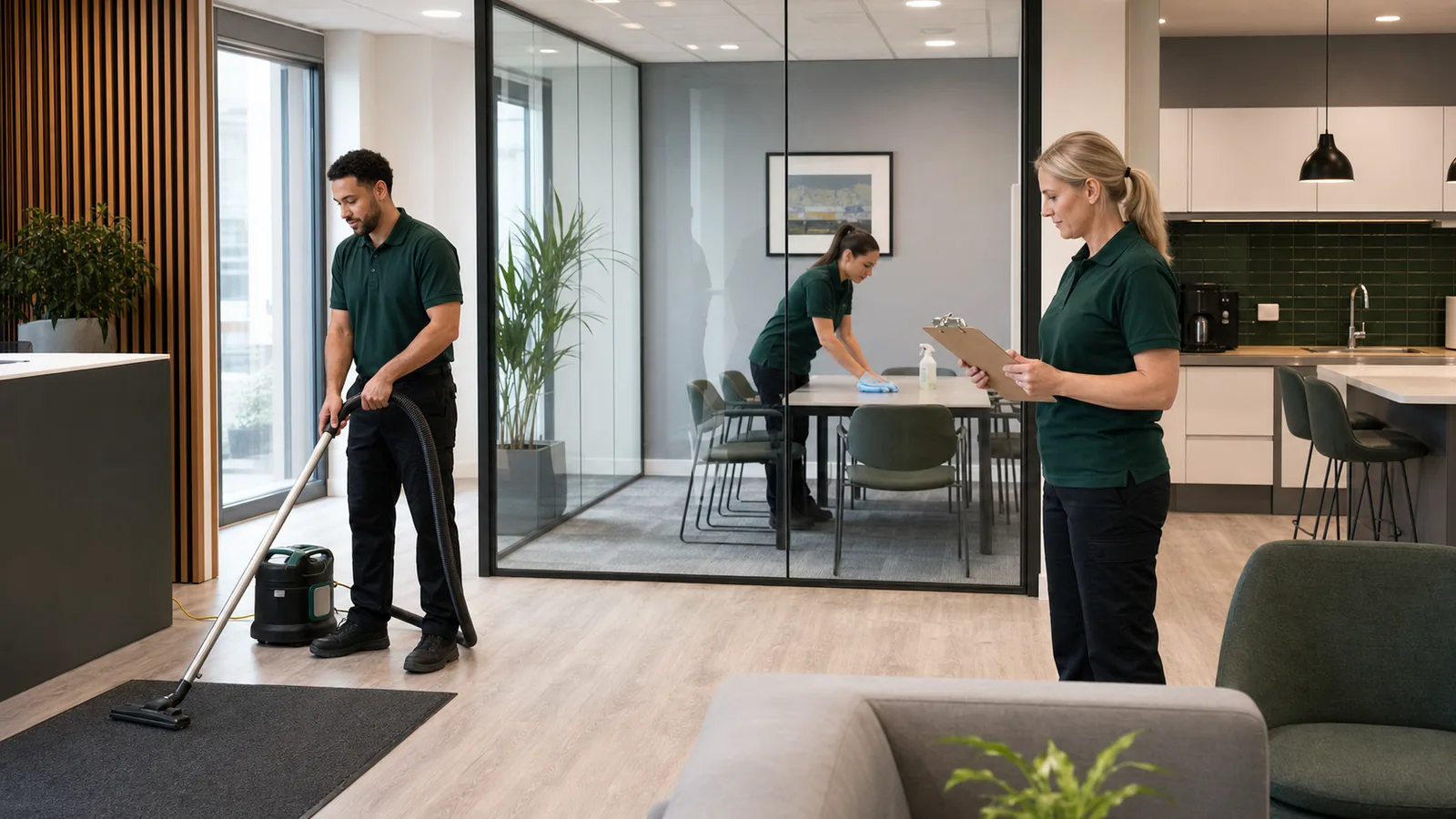
A checklist makes an office cleaning agreement measurable. It tells the cleaner what to do, helps managers inspect the result and prevents low-visibility tasks from being forgotten.
The best checklist is organised by area and frequency. It should also state exclusions, consumables responsibility and any safety or access constraints.
Entrance and reception
The entrance creates the first impression and collects outdoor soil.
Routine tasks
- Vacuum entrance matting
- Sweep, vacuum or mop the floor as appropriate
- Remove obvious marks from doors and internal glass
- Dust reception surfaces
- Empty bins
- Straighten agreed furniture and display items
- Wipe accessible touchpoints
Periodic tasks
- Deep-clean entrance matting
- Detail edges and skirting boards
- Clean internal glass fully
- Dust high ledges where safely reachable
During wet weather, the entrance may need additional checks to manage appearance and slip risks.
Desk and workstation areas
Agree whether cleaners may move papers, personal items or equipment. A clear-desk policy makes cleaning more consistent.
Routine tasks
- Empty general waste and recycling
- Vacuum accessible floor areas
- Dust clear, accessible desk surfaces
- Wipe agreed shared touchpoints
- Spot-clean doors and partitions
Periodic tasks
- Vacuum beneath movable chairs and furniture
- Detail skirting boards and cable-area edges
- Dust accessible vents and ledges
- Clean fabric chairs or partitions if included
Electronic equipment needs appropriate methods. Do not spray products directly onto screens, keyboards or powered devices.
Meeting rooms
Meeting rooms often have bursts of heavy use.
- Wipe clear tables
- Arrange chairs to the agreed layout
- Empty bins
- Remove cups or catering waste as agreed
- Clean whiteboards only with approved products
- Wipe door handles and shared controls
- Vacuum or mop flooring
- Spot-clean internal glass
Add a check after scheduled client days or large meetings rather than relying only on a fixed weekly routine.
Office kitchen or tea point
Responsibility must be clear. If staff leave dishes and food, a cleaner may not have time to complete hygiene tasks.
Routine tasks
- Clean worktops and sink
- Wipe taps and handles
- Clean appliance exteriors
- Empty bins and replace liners
- Wipe tables
- Vacuum and mop flooring
- Replenish agreed consumables
Rotational tasks
- Clean microwave interior
- Wipe cupboard fronts
- Check and clean fridge shelves under the workplace policy
- Descale selected fixtures
- Detail splashbacks and edges
Set a documented process for abandoned food. Cleaners should not have to decide whether an unlabelled lunch can be discarded.
Washrooms
Washrooms often determine how occupants judge the whole cleaning service.
- Clean and disinfect toilets and urinals
- Clean basins, taps and dispensers
- Clean mirrors
- Wipe touchpoints
- Empty sanitary and general waste under the agreed arrangement
- Replenish soap, tissue and paper products
- Spot-clean partitions and doors
- Vacuum or mop floors
- Report leaks, blockages, damage and low stock
High-occupancy workplaces may need daytime checks in addition to an evening clean.
Corridors, stairs and lifts
- Vacuum or mop traffic routes
- Clean handrails and agreed touchpoints
- Remove marks from doors and internal glass
- Clean lift floors and mirrors
- Dust ledges and accessible signage
- Report lighting, trip or spill concerns
Confirm responsibility for external steps, shared lobbies and areas controlled by a landlord or building manager.
Waste and recycling points
Define:
- Which bins the cleaner empties
- Where bags are taken
- How recycling streams are separated
- Who supplies liners
- How confidential waste is handled
- What happens with heavy, sharp or hazardous waste
General office cleaning should not silently absorb specialist waste responsibilities.
Add frequencies and service standards
Beside every task, specify daily, visit-based, weekly, monthly or periodic. Avoid vague wording such as “regularly”.
Our guide to office cleaning frequency explains how staff numbers, footfall and building use affect the schedule.
Include a review process:
- Named contact for routine feedback
- Method for reporting urgent issues
- Regular service review
- Agreed response to missed tasks
- Process for changing the specification
RelyPro creates written schedules for office cleaning in Derby after assessing the workplace. Share the floor area, attendance pattern, facilities, preferred access times and current pain points to receive a relevant proposal.