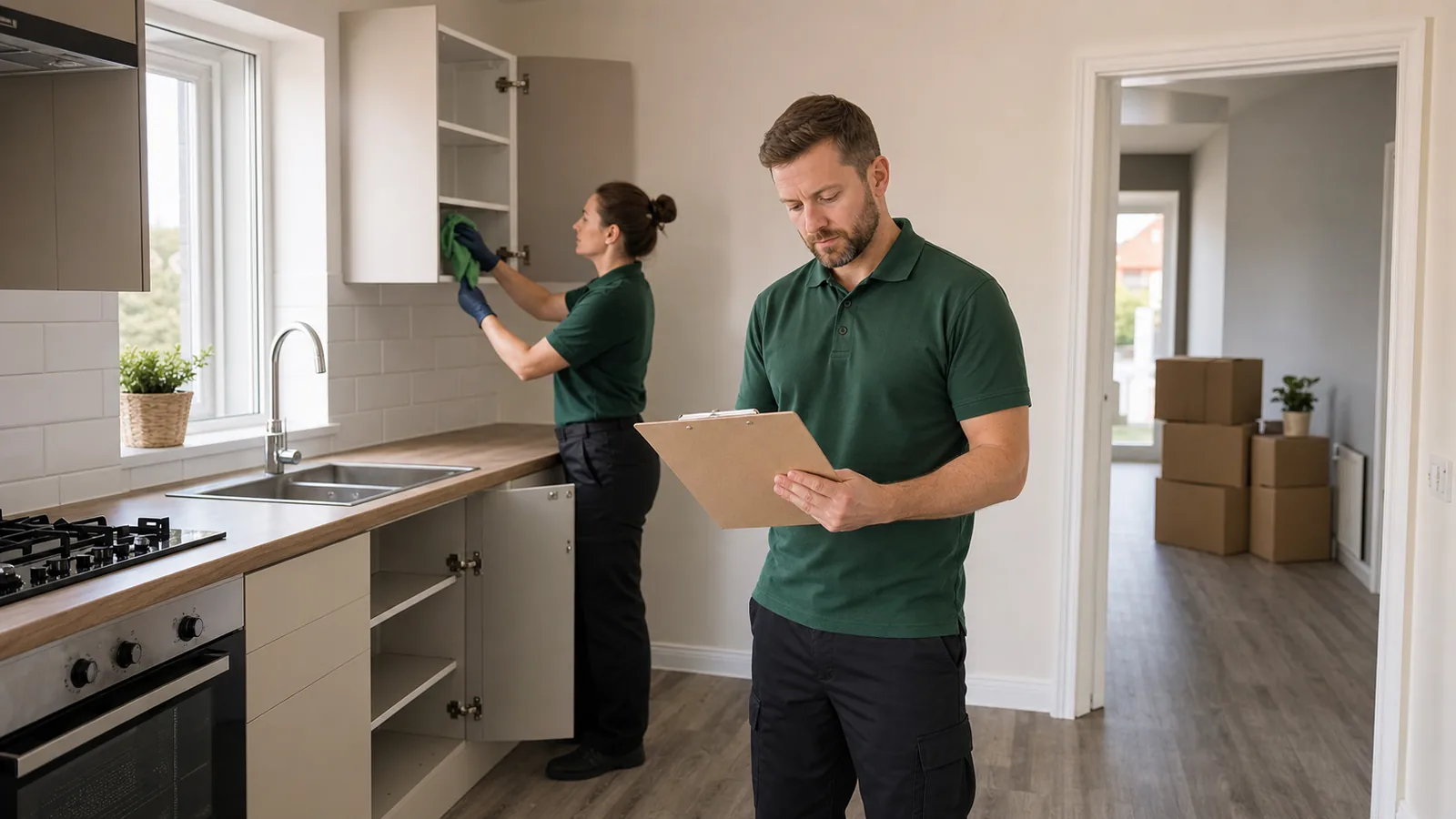
Moving out combines packing, administration and cleaning in a very short period. A room-by-room plan helps you avoid leaving the most time-consuming jobs until the final evening.
The aim is normally to return the property in the same level of cleanliness recorded at check-in, allowing for fair wear and tear. In England, a landlord cannot simply require a tenant to pay for a professional clean, although the property can be expected to be cleaned to a professional standard. Refer to the current government guidance on the Tenant Fees Act if you are unsure about a requested charge.
This article provides cleaning guidance, not legal advice. Your tenancy agreement, inventory and check-in photographs should guide the final standard.
Before cleaning: collect the evidence
Find the documents that show the property's starting condition:
- Signed check-in inventory
- Check-in photographs or video
- Tenancy agreement
- Emails recording existing marks or damage
- Agent or landlord checkout instructions
Walk through the property with these records before you start. Separate cleaning issues from maintenance or damage so you can raise the latter promptly rather than trying to disguise them.
Work in the right order
An efficient sequence prevents you cleaning the same area twice:
- Remove possessions, unwanted items and rubbish.
- Defrost appliances if required by the instructions.
- Dust from high surfaces downwards.
- Degrease the kitchen and clean appliances.
- Descale and clean bathrooms.
- Clean bedrooms and living areas.
- Vacuum carpets and edges.
- Mop hard floors as you leave.
- Complete a final inspection in daylight.
Book specialist carpet or oven cleaning early enough to allow drying and reinspection before checkout.
Kitchen checklist
Kitchens often require the most time because grease and food residue settle in places missed during routine cleaning.
- Empty and wipe cupboards and drawers inside and out
- Clean worktops, splashbacks, sinks and taps
- Degrease the hob, controls and extractor exterior
- Clean the oven if included in the agreed scope
- Clean the microwave internally and externally
- Empty, defrost and clean the fridge and freezer where required
- Pull out movable appliances and clean behind them safely
- Wipe switches, handles, doors and skirting boards
- Remove food, rubbish and recycling
- Vacuum and mop the floor, including accessible edges
Do not move appliances that are fixed, unsafe or too heavy. Record inaccessible areas and discuss them with the agent.
Bathroom and WC checklist
Limescale, soap residue and hair are particularly visible during an inventory inspection.
- Clean and disinfect toilets, seats, hinges and exteriors
- Descale taps, shower fittings and screens using suitable products
- Clean the bath, basin, tiles and grout
- Remove hair from accessible drains
- Polish mirrors and glass
- Wipe cupboards, shelves and extractor covers
- Clean radiators or towel rails when cool
- Remove toiletries and empty bins
- Vacuum and mop the floor
Ventilate the room while working and never mix cleaning chemicals. Always follow product labels and test unfamiliar products on a discreet area.
Bedrooms, living rooms and hallways
Once furniture and belongings have been removed:
- Dust ceilings, light fittings and high corners where safely reachable
- Wipe doors, frames, handles and switches
- Clean window sills and accessible internal glass
- Dust wardrobes and shelving inside and out
- Wipe skirting boards and radiators when cool
- Check behind and beneath movable furniture
- Remove adhesive residue carefully without damaging paint
- Vacuum carpets slowly, including edges
- Mop suitable hard floors
Check cupboards, loft access areas and outdoor storage for forgotten belongings.
Details that are commonly missed
Leave time for the small points an inspector is likely to notice:
- Tops of door frames
- Plug sockets and light switches
- Extractor covers
- Inside kitchen bins
- Washing-machine detergent drawers and seals
- Dishwasher filters
- Fridge shelves and door seals
- Dust behind radiators
- Cobwebs in corners
- Marks on internal doors
Only clean appliances and filters where it is safe and consistent with the manufacturer’s instructions.
Record the finished condition
After cleaning, take clear, timestamped photographs or video of every room. Include appliance interiors, cupboards, sanitary fittings, floors and any pre-existing damage. Keep cleaning invoices and written communications.
Evidence does not guarantee that no deduction will be proposed, but it helps everyone compare the condition at the beginning and end of the tenancy fairly.
When professional help is worthwhile
A professional end-of-tenancy clean can be useful when the property is large, heavily used, already empty or subject to a tight checkout deadline. Provide the cleaner with the inventory, property size, number of bathrooms and any agent checklist before accepting a quote.
Ask exactly what is included. Oven cleaning, carpet extraction, external windows, balconies and heavily soiled areas may be separate services.
RelyPro offers end-of-tenancy cleaning across Derby with a written scope and transparent guide prices. The clean supports a well-prepared handover, but no cleaning company can guarantee a deposit outcome because deductions can concern damage, rent or other matters outside cleaning.