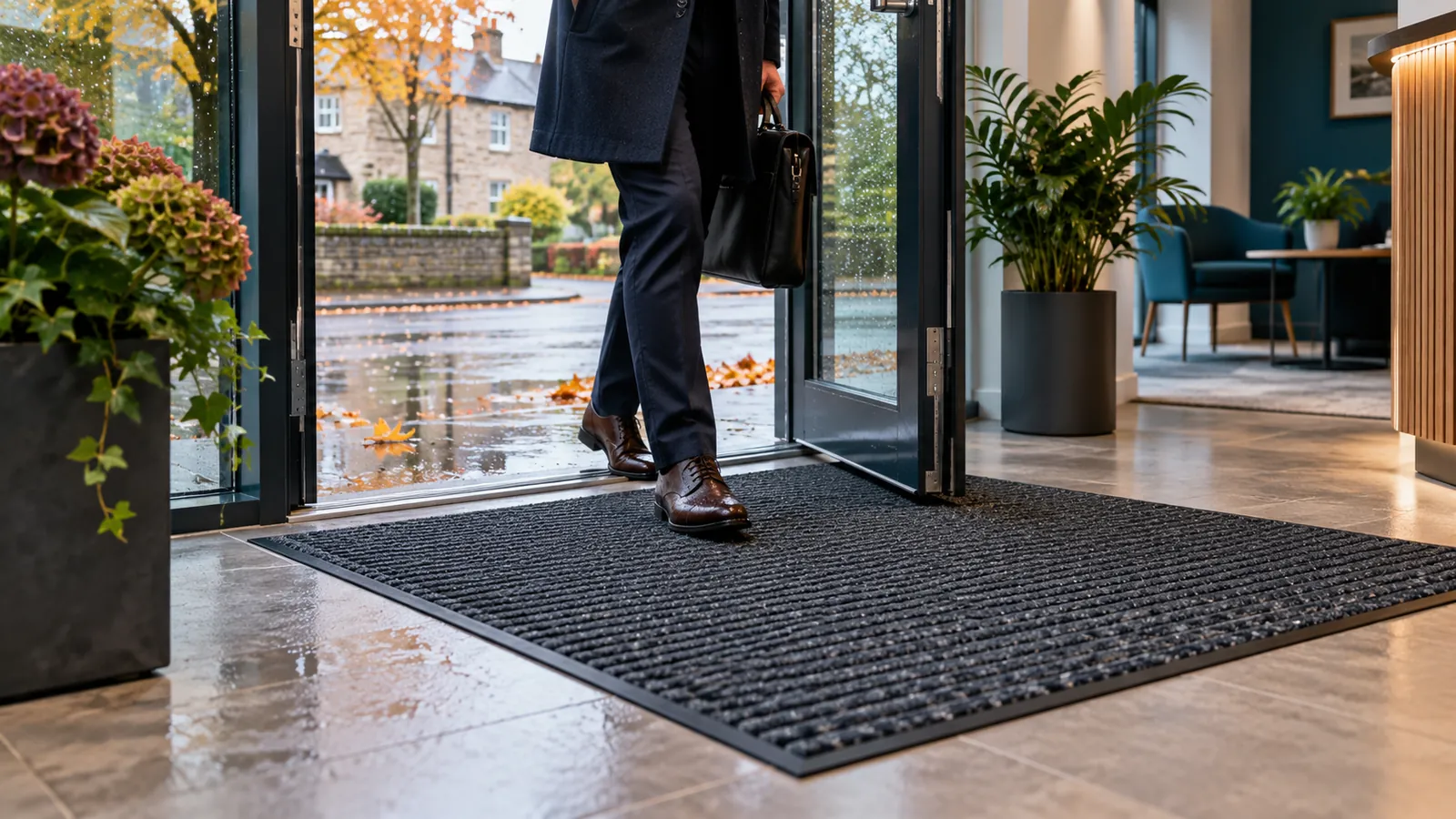
Wetter weather changes where an office needs attention. Entrance mats take more moisture, hard floors show tracked-in dirt and shared kitchens may get busier as staff spend breaks indoors. An autumn review helps the cleaning schedule respond to these changes.
Start with the building's actual use rather than increasing every task automatically. For a Derby office, the most useful adjustments may be a better entrance routine, a clearer spill response and a few periodic tasks added to an existing agreement.
Inspect the route into the building
Look at external approaches, the threshold, mats and the first stretch of internal flooring. Note where moisture and grit collect. Keep responsibility for exterior maintenance clear, especially in shared premises.
Mats should sit securely and remain usable. A saturated, damaged or curled mat needs action through the appropriate facilities process. It should not create an additional obstruction or trip point.
Agree who checks the entrance between scheduled cleaning visits. A cleaner arriving in the evening cannot manage a wet patch that develops during a busy morning.
Match floor care to the material
Different floors need different methods. Check manufacturer guidance for products and equipment, especially around sealed wood, stone and specialist finishes. Do not assume a stronger solution will deal with tracked-in residue more effectively.
Remove loose dirt before wet cleaning. Plan the work so people can use a safe alternative route while floors dry, and follow the workplace's arrangements for restricting access where needed.
| Area | Autumn review question |
|---|---|
| Reception | Are mats coping with actual footfall? |
| Corridors | Where does grit collect at edges? |
| Kitchen | Are spills dealt with during working hours? |
| Washrooms | Is the visit frequency still appropriate? |
| Meeting rooms | Has occupancy changed since summer? |
Record changes to scope in writing so both the office contact and the cleaning team understand the new priorities.
Revisit shared facilities
Check whether kitchen waste, washroom supplies and frequently touched points require different attention as occupancy changes. Hybrid working can concentrate use on particular days, making a flat weekly pattern less effective.
Staff responsibilities still matter. Decide who reports empty supplies, clears meeting-room crockery and manages food left in the kitchen. Those tasks should not fall into a gap between the office team and the cleaning provider.
Use appropriate products as instructed. Where disinfection is specified, allow the stated contact time and follow any surface compatibility or rinsing requirements.
Schedule periodic work sensibly
An autumn review is a good moment to inspect carpeted areas, accessible skirting and neglected corners. Decide which tasks belong in the routine and which need separate time or equipment.
Carpet cleaning should be planned around drying and building access. Ask the provider about the proposed method and expected conditions rather than scheduling important footfall immediately after the work.
Persistent damp, leaks or unusual odours need suitable investigation. Repeated cleaning of the same area may improve appearance while leaving the underlying problem unresolved.
Use a brief review after the first wet spell
Ask the office contact and cleaners what changed in practice. Look for recurring dirt at one doorway, stock running out on busy days or work that cannot be completed safely within the existing window.
RelyPro can discuss seasonal priorities as part of office cleaning in Derby. Share floor types, occupancy patterns and access hours when requesting an assessment. Our office washroom schedule can help with that part of the review.