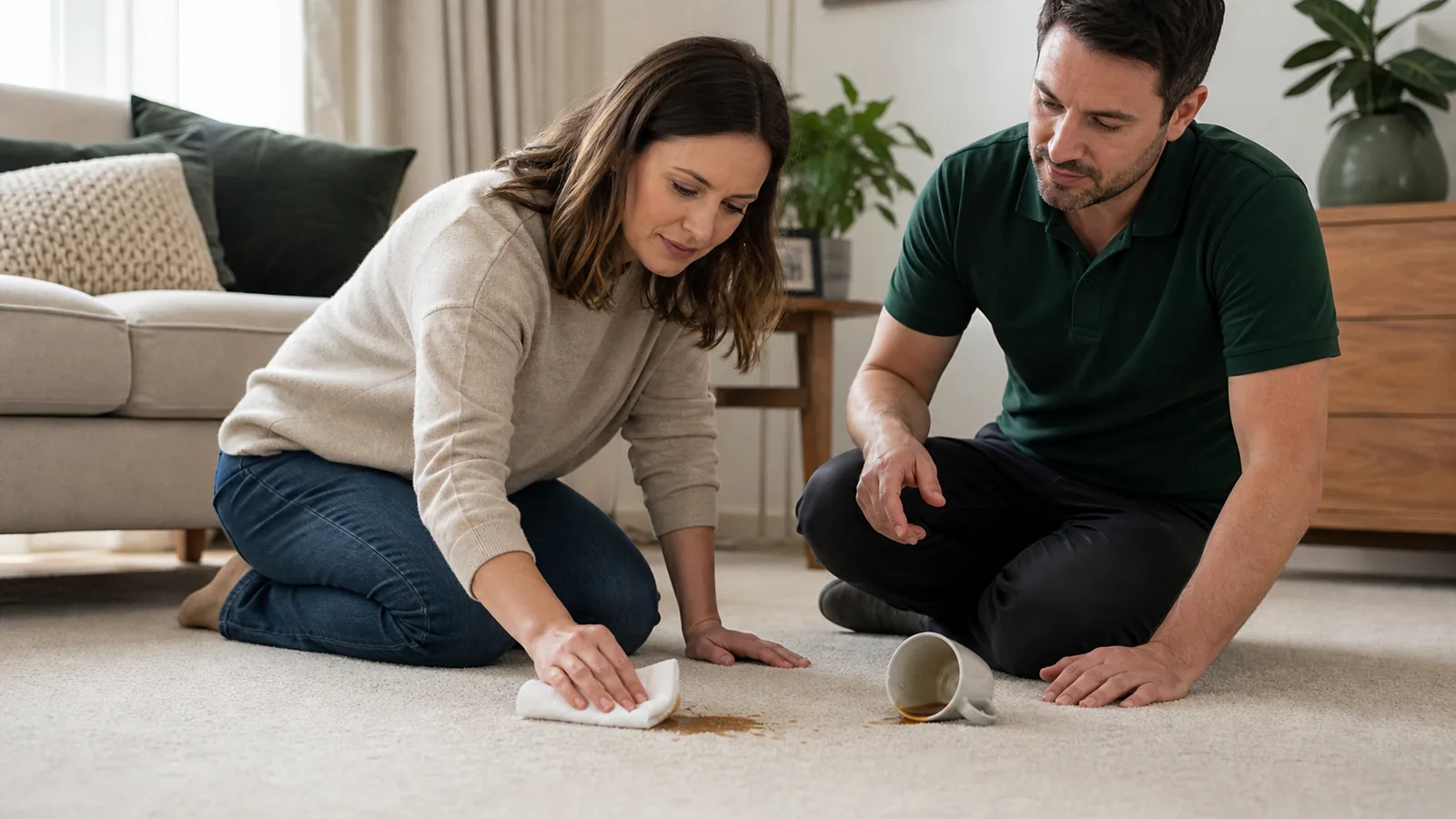
The first few minutes after a spill can make a significant difference, but rushing to apply the strongest product in the cupboard can make the problem worse.
Carpet fibres, dyes and backing materials react differently to moisture and chemicals. The safest general approach is to remove excess material, blot gently and avoid over-wetting while you identify the carpet and spill.
Step 1: remove solids carefully
If the spill contains food, mud or another solid:
- Lift it with a spoon or blunt scraper
- Work from the outside towards the centre
- Avoid grinding particles into the pile
- Place the material directly into a bag or container
For dried material, careful vacuuming may be appropriate before introducing moisture. Do not vacuum liquids unless the machine is specifically designed for wet pickup.
Step 2: blot—do not scrub
Use a clean, colourfast white cloth or plain paper towel to absorb liquid. Press down gently, lift and move to a clean section. Repeat until little moisture transfers.
Scrubbing can:
- Spread the spill over a larger area
- Distort or fuzz the carpet pile
- Push contamination deeper
- Transfer colour from the cloth
Always work from the edge towards the centre to limit spreading.
Step 3: identify the spill and carpet
Before selecting a product, ask:
- What caused the stain?
- Is it water-based, oily, sugary or protein-based?
- Is the carpet wool, synthetic or a blend?
- Does the manufacturer provide care instructions?
- Has another chemical already been applied?
- Is the carpet colourfast?
If you cannot identify the fibre or previous treatment, stop before experimenting with multiple products.
Step 4: test any treatment
Read the product label and confirm it is intended for the carpet type. Test a small amount in a hidden area and allow enough time to check for colour change, texture damage or residue.
Apply treatment to a cloth where the instructions allow, rather than pouring it directly onto the carpet. Use the minimum moisture required and continue blotting.
Never mix cleaning products. In particular, combining bleach with ammonia or acidic products can release dangerous gases.
Common mistakes to avoid
Using hot water automatically
Heat can set some protein-based stains and affect certain fibres. Follow guidance for the specific spill rather than assuming hotter is stronger.
Saturating the carpet
Excess liquid can spread into the backing or underlay, increase drying time and cause odour or shrinkage. More solution is not necessarily more effective.
Applying washing-up liquid without controlling residue
An overly soapy mixture can be difficult to rinse and may leave a sticky residue that attracts soil. Use a carpet-appropriate product at the stated dilution.
Repeatedly trying different chemicals
Each treatment changes the stain and may react with the next product. If the first safe attempt does not work, record what you used and seek advice.
Hiding the area beneath furniture
Trapped moisture needs airflow. Do not cover a damp patch or place metal furniture legs on it, as this can cause marks or slow drying.
Handle different spills with care
The following are broad first-response principles, not guaranteed stain-removal recipes:
- Water and clear drinks: blot promptly and dry with airflow.
- Coffee, tea or wine: blot without spreading, then use a compatible treatment after testing.
- Grease or cosmetics: avoid adding water immediately; a carpet-specific solvent approach may be needed.
- Mud: remove excess and allow remaining mud to dry where appropriate before vacuuming.
- Pet accidents: absorb promptly and use a suitable odour and contamination treatment; avoid merely masking the smell.
- Paint or ink: identify the product type before acting and seek professional advice quickly.
Stain removal results depend on the substance, fibre, dye, temperature, previous treatments and time elapsed.
Dry the area properly
After treatment:
- Blot out as much moisture as possible
- Improve ventilation
- Keep foot traffic away
- Do not use intense direct heat
- Check the carpet and underlay for continuing dampness
If a large volume reached the underlay, surface treatment may not be enough. Prompt professional assessment can reduce the risk of persistent odour or secondary damage.
When to call a professional
Seek help when:
- The carpet is wool, delicate, valuable or unknown
- The spill is large or has reached the underlay
- The substance may be hazardous
- Colour is transferring
- Previous treatments have not worked
- Odour remains after drying
- The stain involves paint, dye, ink, oil or bodily fluids
Tell the technician exactly what happened and which products were applied. Honest information supports safer treatment.
RelyPro provides carpet cleaning in Derby, with quotes based on room size, fibre, condition, access and the areas requiring attention. No responsible cleaner can promise removal of every permanent stain, but early, appropriate treatment gives the best opportunity for improvement.