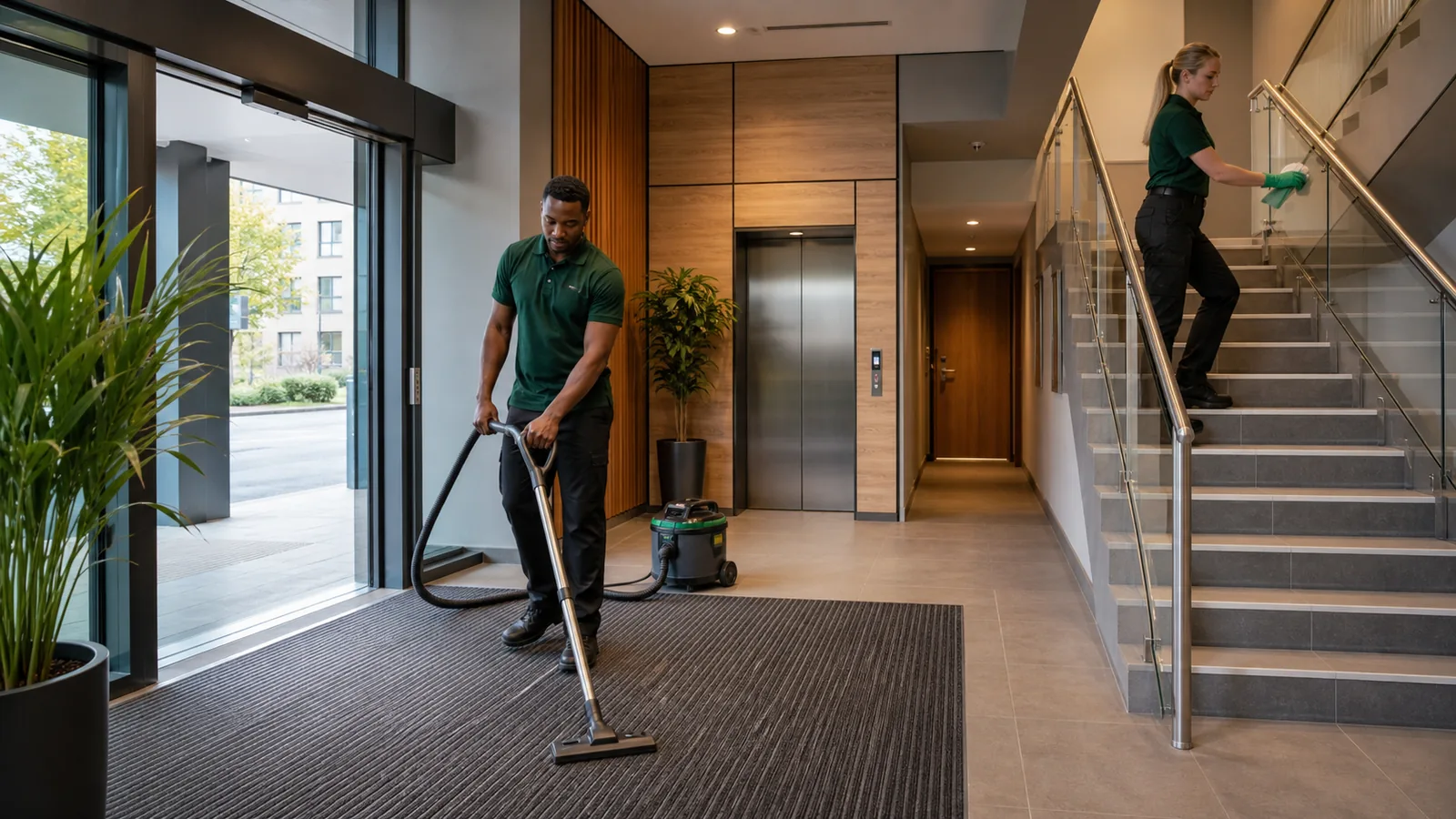
Communal areas shape how residents and visitors judge an apartment building. They also create practical challenges: constant foot traffic, shared responsibility, restricted access and seasonal mud.
A clear specification should identify every shared area, the required frequency and who handles issues outside ordinary cleaning.
Map the complete communal space
Walk the building from the pavement or car park to the highest shared floor. Record:
- External entrance and canopy
- Lobby and entrance matting
- Mail area
- Corridors and landings
- Stairs and handrails
- Lifts
- Internal glass and doors
- Shared lounges or workspaces
- Bin and recycling areas
- Bicycle or pram storage
- Laundry rooms
- Management or plant access areas
Confirm which spaces belong to the cleaning contract and which are controlled by another party.
Prioritise entrance presentation
Entrances collect grit, leaves and water. Routine tasks may include:
- Vacuuming or cleaning matting
- Sweeping and mopping suitable flooring
- Removing marks from internal doors and glass
- Wiping handles and access panels
- Dusting ledges and mail surfaces
- Emptying agreed bins
- Reporting damaged or saturated matting
During wet weather, more frequent checks may be required. Cleaning supports risk control but does not replace suitable matting, maintenance or building safety procedures.
Corridors, stairs and lifts
A practical routine covers:
- Vacuuming carpeted routes
- Mopping hard floors
- Cleaning skirting edges on rotation
- Wiping handrails
- Removing marks from doors and walls where safe
- Cleaning lift floors, mirrors and controls as agreed
- Dusting accessible ledges and signage
- Reporting failed lights, trip concerns or damage
Use appropriate warning signs and avoid leaving wet routes as the only means of access.
Set a defensible frequency
Frequency depends on:
- Number of apartments
- Resident and visitor footfall
- Pets
- Children and pushchairs
- Building layout
- Flooring type
- Parcel deliveries
- Weather exposure
- Bin arrangements
- Standard expected by residents or managing agents
Busy entrances may need attention several times each week while higher landings need less frequent detailed work. Use a combination of visit-based routine tasks and weekly or monthly rotations.
Clarify bin-area responsibilities
Bin stores require especially precise scope. Agree:
- Whether cleaners move ordinary loose waste
- Who presents bins for collection
- Responsibility for bulky items
- Spill and leakage procedures
- Cleaning frequency
- Pest or sharps escalation
- Water and drainage access
- Whether deodorising products are appropriate
Cleaners should not handle unknown hazardous waste or sharps as ordinary rubbish.
Manage keys and access securely
Document:
- Key, fob or code issue
- Who can authorise replacement access
- Alarm instructions
- Permitted working hours
- Lone-working considerations
- Storage areas available to cleaners
- Resident communication for disruptive work
Do not place access codes in an unsecured general checklist.
Use an inspection record
A simple service record might capture:
- Visit date and time
- Areas completed
- Rotational tasks completed
- Consumables used
- Damage or maintenance reports
- Access problems
- Photographs of exceptional issues
Residents should have a clear route for feedback, but the managing party should consolidate instructions so cleaners are not receiving conflicting requests from multiple people.
Separate cleaning from maintenance
Cleaning will not fix:
- Leaking roofs or pipes
- Damaged flooring
- Persistent damp
- Failed lighting
- Broken access systems
- Pest entry points
- Heavily worn decoration
Prompt reporting helps the responsible manager arrange the correct trade.
Plan periodic services
Depending on materials and use, plan:
- Carpet extraction
- Hard-floor machine cleaning
- High-level dusting
- Internal window cleaning
- Entrance mat cleaning
- Detailed bin-store cleaning
- Upholstery cleaning in shared lounges
Include drying time and resident notices where access will be affected.
Review the specification seasonally
Autumn leaves, winter grit and wetter weather can increase entrance demand. Parcel peaks or changes in occupancy also affect use.
Review complaints, actual visit time and repeated maintenance concerns at least periodically. Increase or redistribute work based on evidence rather than adding vague tasks.
RelyPro serves apartment buildings and managed properties across our Derby service areas. Share the building layout, apartment count, access arrangements and required frequencies through the quote form for a site-specific proposal.