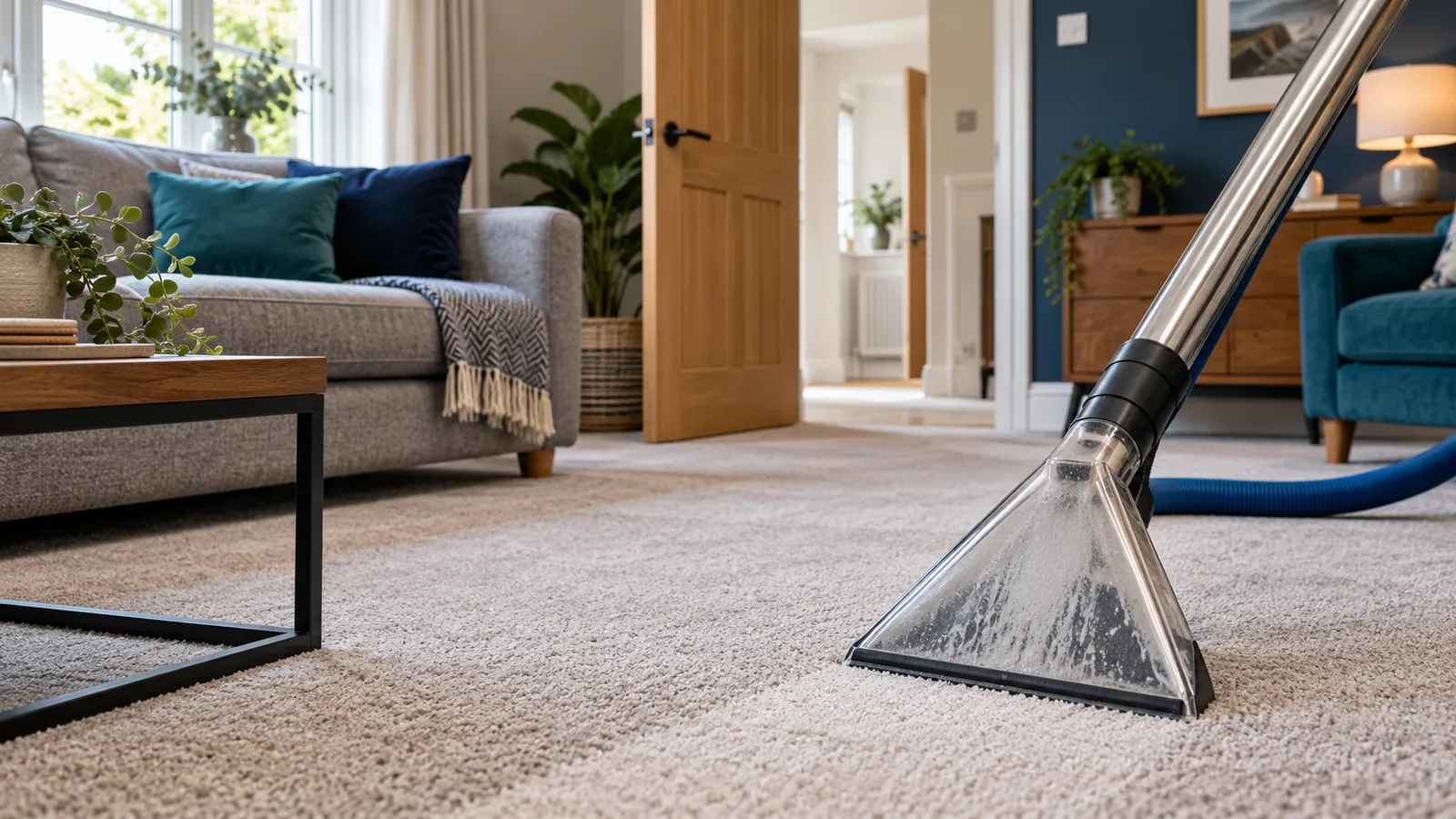
Carpet cleaning does not end when the machine leaves the room. Drying affects when the space can be used normally and when furniture can be returned. Planning for it matters in homes, rental properties and offices alike.
There is no reliable single drying time for every carpet. The material, cleaning method, amount of moisture introduced and room conditions all influence the result. Ask the provider for advice based on the actual property rather than relying on a general online estimate.
Understand what changes the drying period
A thick pile can behave differently from a low-pile carpet, and an already humid room may dry differently from a well-ventilated space. The cleaning process and extraction also matter.
Tell the cleaner about known fibre information, previous cleaning problems and any areas that seem damp before work begins. An existing moisture issue needs to be identified rather than treated as an ordinary cleaning job.
| Factor | Planning implication |
|---|---|
| Fibre and construction | The method must suit the carpet |
| Room conditions | Air movement and humidity affect drying |
| Cleaning method | Moisture levels and aftercare differ |
| Furniture | Some items need protection or delayed replacement |
| Access needs | A room may need to stay out of normal use |
The purpose of this list is to support a discussion with the provider. It is not a promise that changing one factor will produce a particular number of drying hours.
Prepare the room before the visit
Agree which furniture the cleaning team can move and which items must be removed beforehand. Clear small objects, cables and personal belongings so the accessible carpet can be assessed.
Mention heavy, delicate or fixed furniture when requesting the quote. Not every piece can be moved safely, and the proposed scope should identify inaccessible areas.
Plan the route through the property. In an office, tell staff which areas will be affected. In a rental, avoid arranging an inspection or new occupant's arrival before the provider's aftercare guidance can be followed.
Follow the recommended aftercare
Use the ventilation and heating advice given for the carpet and building conditions. Opening a window may be useful in some circumstances, but security, weather and outdoor humidity also need consideration.
Do not use improvised high heat or place unsuitable electrical equipment near damp areas. Follow the cleaner's and manufacturer's instructions rather than trying to force drying with an unassessed method.
Keep unnecessary traffic off the carpet while it is drying. If limited access is unavoidable, ask how to manage it without transferring dirt or creating a slip risk when stepping onto adjacent hard floors.
Return furniture carefully
Follow instructions about furniture protectors and when they can be removed. Some furniture finishes or metal components may mark a damp carpet, so do not replace items simply because the surface feels less wet.
Avoid covering a damp area with a rug or protective sheet that could restrict drying. Check before moving large items back into place, particularly where the room has had little air movement.
Raise concerns promptly
If a carpet remains unusually wet, develops an unexpected odour or shows a problem after cleaning, contact the provider for guidance. Explain the room conditions and what you have observed rather than repeatedly applying more products.
For carpet cleaning in Derby, tell RelyPro the room sizes, known carpet type, stains and the date the space needs to be usable. Our between-tenancies carpet guide helps place the work within a wider property turnaround.