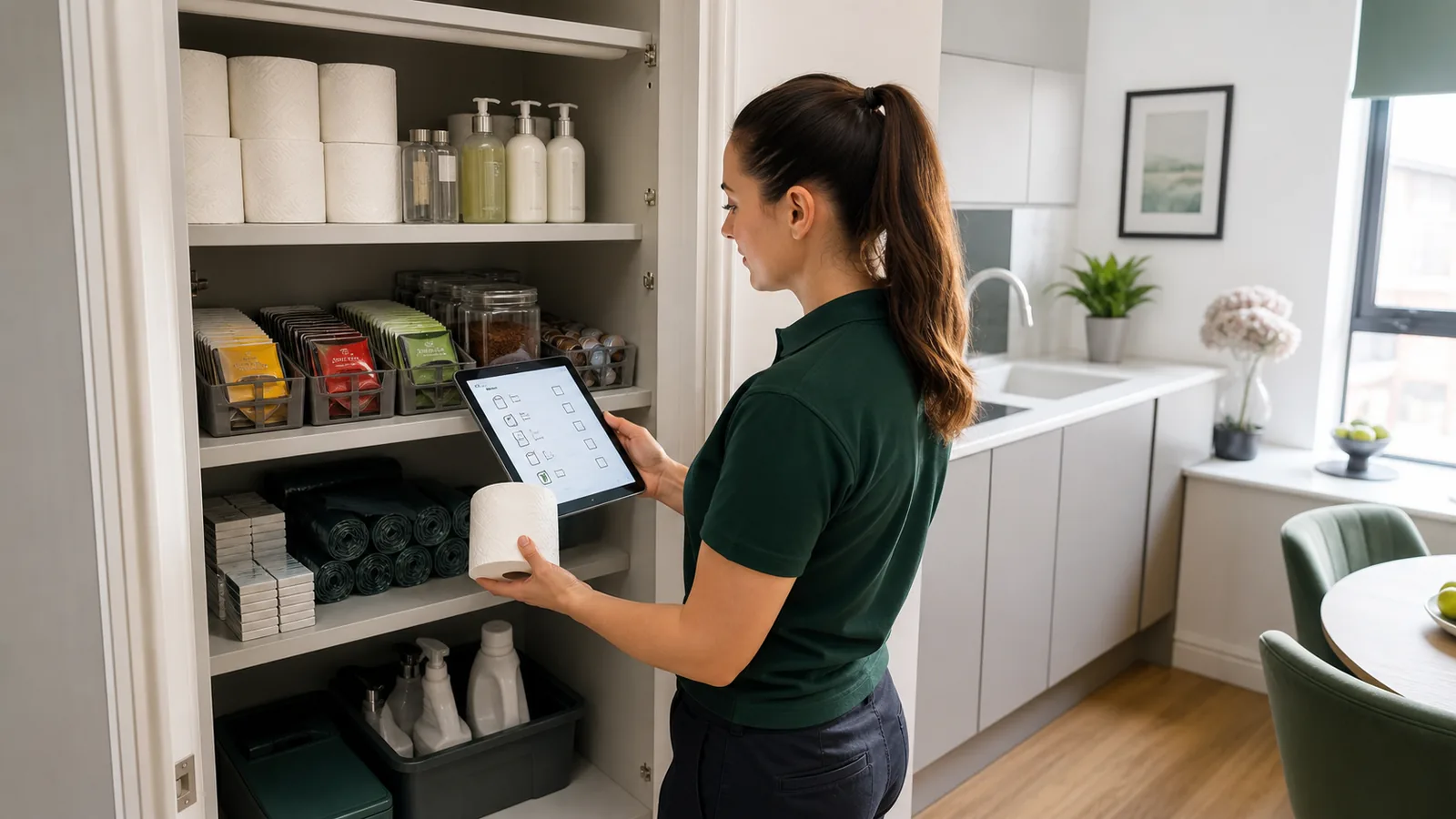
Restocking looks simple until several reservations overlap, one apartment uses the last toilet roll and nobody knows whether more coffee is in the cleaner’s car or the locked cupboard.
A dependable system is based on agreed quantities, labelled storage and clear reporting. It should give every guest the promised essentials without filling the property with waste or tying up money in excess stock.
Start with what your listing promises
Review the amenities shown in your listing and arrival information. If you advertise toiletries, coffee, laundry supplies or cooking basics, guests should find them available and usable.
Airbnb advises hosts to stock basic supplies, maintain a cleaning routine and use a turnover checklist. Its current guidance on preparing a space is a useful reference when deciding what your property should consistently provide.
Create three categories:
- Essential for every stay – items that must always be present.
- Starter quantity – enough for arrival, with guests buying more during longer stays.
- Optional hospitality extras – additions that suit your positioning and budget.
Make the distinction clear in the listing so guests know what to expect.
Bathroom restocking checklist
Your agreed list might include:
- Toilet rolls
- Hand soap
- Shower gel, shampoo and conditioner
- Sanitary disposal bags
- Facial tissues
- Clean hand and bath towels
- Bath mat
- Spare bin liner
Choose refillable dispensers or individual containers based on hygiene, maintenance and brand goals. If using refillable bottles, label them clearly and check pumps, lids and product condition during every turnover.
Store chemicals away from toiletries and out of children’s reach.
Kitchen essentials
Common kitchen restocking items include:
- Tea and coffee
- Sugar or sweetener
- Salt and pepper
- Washing-up liquid
- Sponge or fresh dishcloth
- Dishwasher tablets
- Kitchen roll
- Bin liners and recycling bags
- Clean tea towels
Do not leave opened food from previous guests unless your documented policy and food-safety approach permit it. Check dates and packaging condition. Avoid presenting a half-used collection of miscellaneous items as a thoughtful welcome.
Cleaning supplies for guests
Guests often appreciate the ability to deal with small spills. A simple, safely stored kit may contain:
- Multi-surface cleaner
- Washing-up liquid
- Paper towels or washable cloths
- Dustpan and brush
- Mop or floor wipes suitable for the flooring
- Vacuum cleaner with clear instructions
- Laundry detergent if a washing machine is offered
Never mix or decant chemicals into unlabelled containers. Keep original safety information available and position products securely.
Linen and bedroom inventory
Linen is not a consumable, but it needs the same stock discipline. Record:
- Number and size of complete bedding sets
- Pillow and mattress protectors
- Bath, hand and kitchen towels
- Spare blankets where offered
- Items removed because of stains or damage
- Stock held at the property, laundry and storage location
For back-to-back bookings, multiple complete sets per bed reduce the risk that delayed laundry affects check-in. The correct number depends on turnaround time, laundry arrangements and occupancy.
Use minimum and target quantities
For each item, define:
- Presentation quantity: what is left in the guest area
- Reorder point: the quantity that triggers a purchase
- Target stock: how much should be held after restocking
- Storage location: the exact cupboard, shelf or store
- Approved product: size, type and acceptable substitute
For example, “toilet roll: two presented in the bathroom, eight in locked stock, reorder when four remain” is far clearer than “check toilet rolls”.
Decide who buys and who approves
Restocking arrangements commonly fail because responsibility is vague. Agree:
- Whether the host or cleaning provider purchases items
- Any spending limit
- Whether substitutions are allowed
- How receipts are supplied
- Where bulk deliveries are stored
- Who monitors expiry dates
- How urgent shortages are reported
A cleaner should not have to guess which brand, quantity or budget is acceptable during a short changeover.
Make reporting quick
Use a short completion report rather than relying on memory. It can include:
- Items replenished
- Current low-stock items
- Purchases made and receipts
- Damaged dispensers or storage
- Linen removed from service
- Suggested order before the next booking
Photographs of the locked stock cupboard can be useful, but they should support—not replace—an accurate count for important items.
Review the list as the property changes
Update the inventory when you change guest capacity, add an amenity, alter supplier pack sizes or receive repeated requests. Seasonal additions should have start and end dates so they do not remain on the checklist forever.
RelyPro’s Airbnb turnover cleaning in Derby can include agreed consumable restocking and shortage reporting. Provide the property-specific product list, presentation quantities and purchasing arrangement so every turnover follows the same standard.